
The sewer lateral is the pipe that carries everything from the house out to the city main. When it fails, the symptoms are hard to ignore: repeat backups, a slow whole-house drain, a soggy or unusually green patch in the yard, or a smell near a cleanout. In Mesa, two things drive most sewer failures.
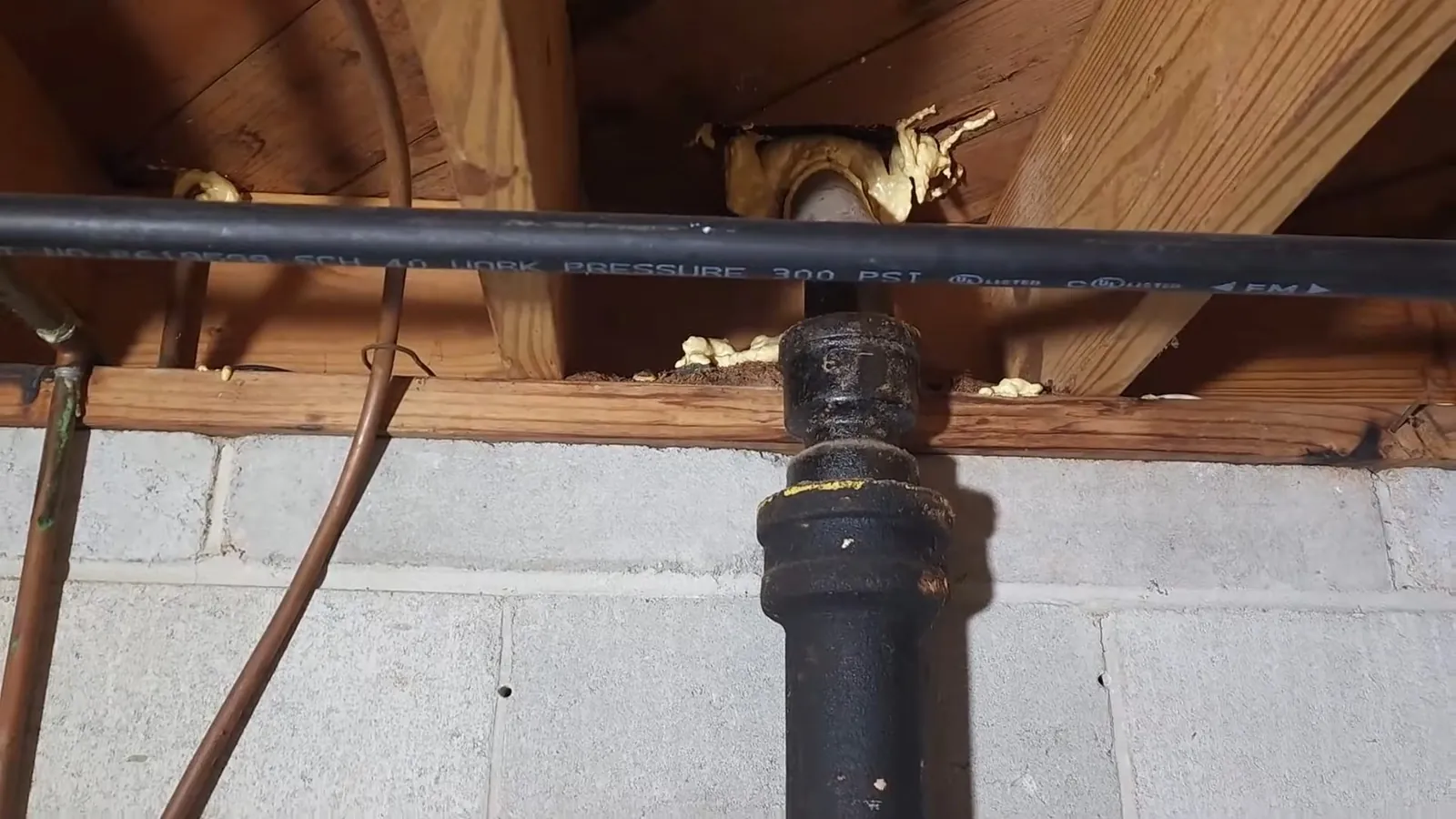
The first is age and material. Older neighborhoods near Main Street and the original city grid often have cast iron or clay laterals that have been in the ground for decades, scaling shut or cracking at the joints. The second is roots. Mature trees over an older line find their way into joints looking for water, and once they are in they keep growing.
Multiple drains backing up is treated as urgent
One slow sink can wait. Several fixtures backing up at once, sewage odor, or water surfacing at the lowest drain in the house means the main line is blocked and it needs same-day attention before it backs up again.
Call any time. Genuine backups are answered the same day, including after hours.
Diagnose before you dig
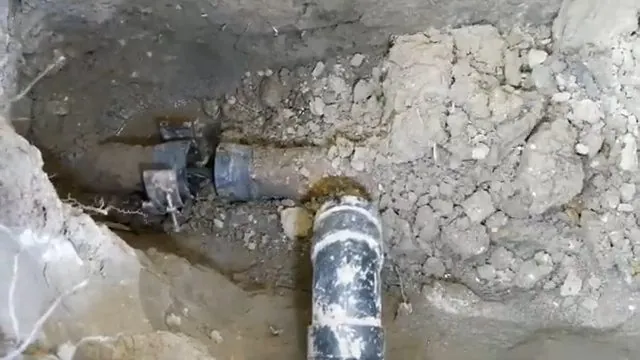
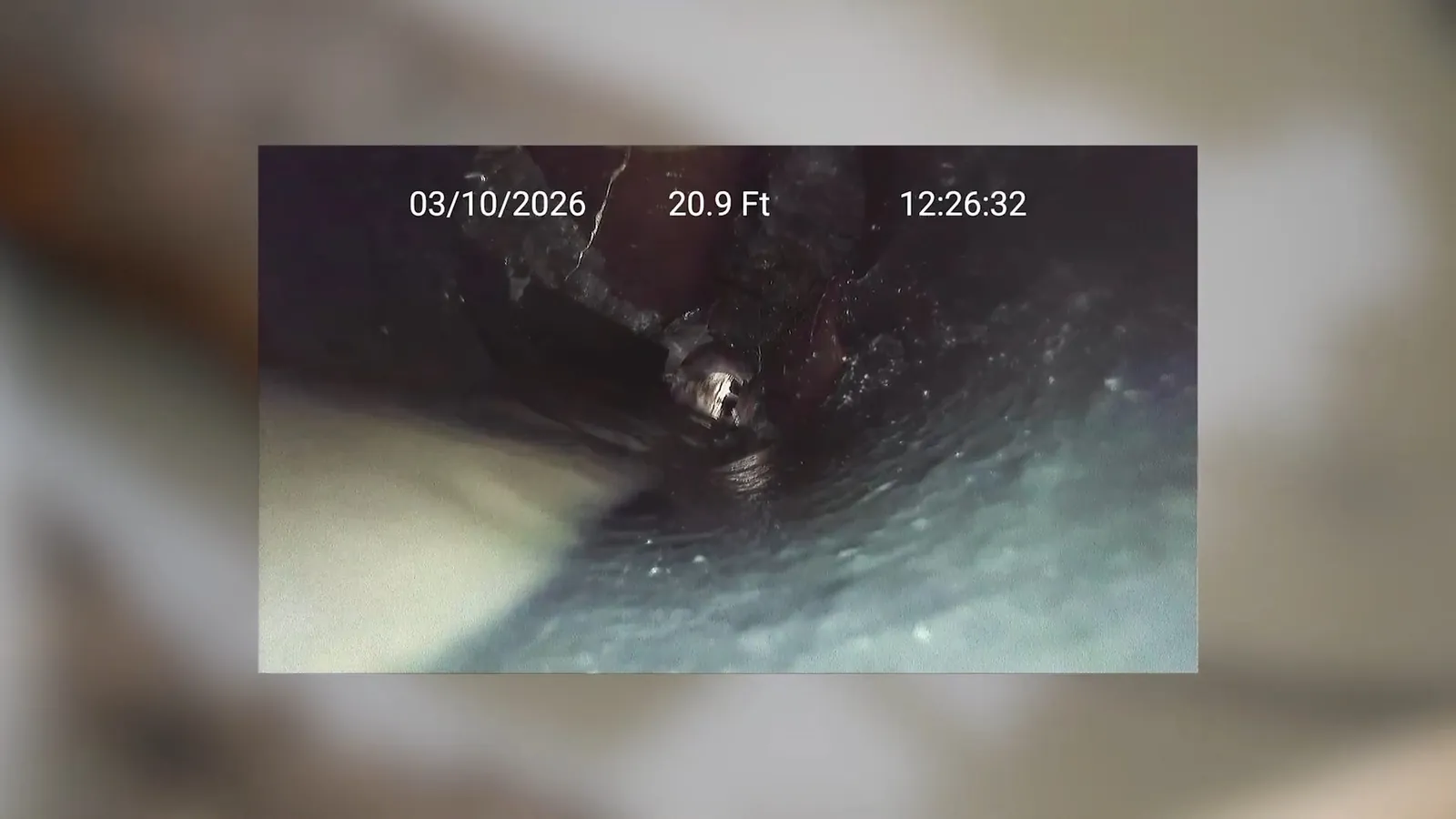
No honest sewer repair starts with a shovel. It starts with a camera run down the line that shows the exact problem and its location: a root mass at a specific joint, a bellied section holding water, a crack, or a full collapse. The camera also locates the fault from the surface, so any digging goes straight to the spot.
That matters here because the ground is not easy to open. Mesa sits over caliche, a hard calcium-carbonate hardpan, and much of the sewer run may be under a slab, a driveway or established landscaping. Knowing precisely where the fault is keeps the excavation small and the yard mostly intact.
| What the camera finds | Typical cause | Usual repair |
|---|---|---|
| Roots at a joint | Mature tree over an older lateral | Clear, then repair the joint so roots cannot return |
| Bellied section | Ground settled out of grade | Re-lay that section to restore proper fall |
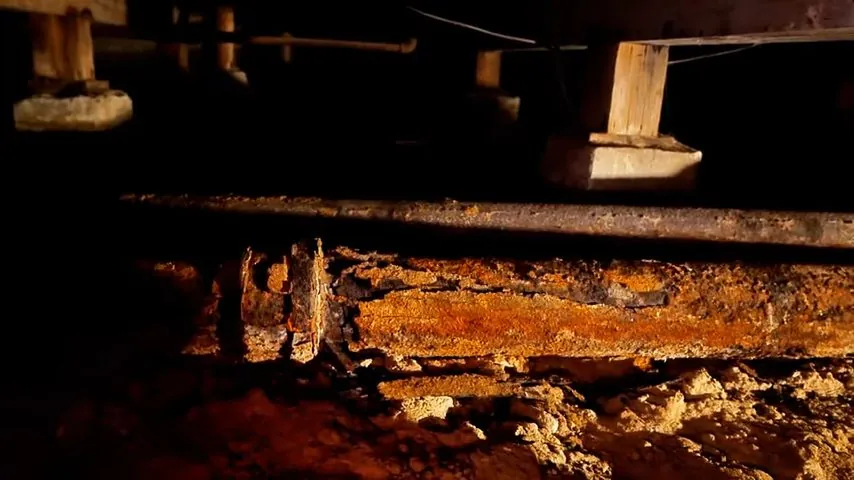
| Scaled or cracked cast iron | Decades-old pipe in an older neighborhood | Spot repair or trenchless replacement of the run |
| Collapse | Failed clay or corroded iron | Full replacement of the affected length |
Multiple drains backing up at once?
That points to the main line, not one fixture. Call and we will camera it before recommending anything.
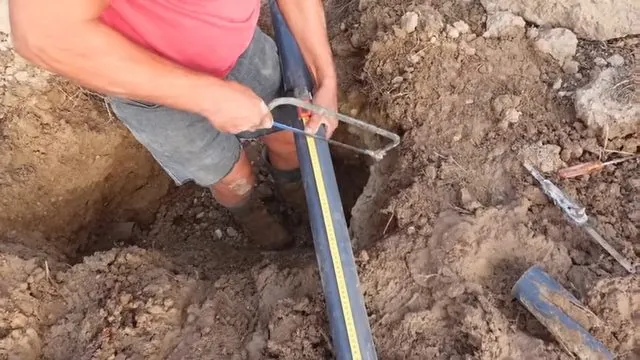
Spot repair, trenchless or full replacement
A single cracked or root-filled section can often be handled as a spot repair, opening the ground at one point. When a longer run is failing, trenchless methods can rehabilitate or replace the pipe through small access points instead of a full open trench, which is gentler on driveways and mature landscaping. A line that has collapsed or aged out entirely gets replaced.
For a root problem, clearing the roots by jetting the line restores flow, but roots return unless the joint they entered through is repaired. That is the difference between a call you make every spring and a fix that holds. The right approach is chosen from what the camera shows and quoted before work begins.
Sewer Line Repair & Replacement questions, answered
How do I know it is the sewer line and not just a clog?
A single fixture clog is local. A sewer line problem shows up as repeat whole-house backups, several drains failing together, a gurgle in the toilet when the washer drains, or a wet, green patch in the yard over the line. A camera inspection confirms it and shows where.
Do you always have to dig up the yard?
Not always. A single fault can sometimes be spot-repaired, and longer runs can often be handled with trenchless methods through small access points rather than a full open trench. Because Mesa ground includes hard caliche, locating the fault precisely first keeps any digging as small as possible.
Why do roots keep coming back after the line is cleared?
Clearing removes the roots but leaves the crack or open joint they came in through, and roots regrow toward that water source. A lasting fix repairs the joint or replaces the section, so there is no longer a way in. That is the difference between an annual clear and a real repair.
Are older Mesa neighborhoods more prone to this?
Yes. Homes near the original downtown grid often have cast iron or clay laterals installed decades ago, which scale, crack and settle over time, and they tend to have the mature trees whose roots find those joints. Newer areas have PVC laterals that hold up better.
What is the first step if I suspect a sewer problem?
A camera inspection. It turns a guess into a picture: the exact fault, the exact location, and the depth. Everything after that, from a spot repair to a trenchless replacement, is chosen from what the camera actually shows.
Need sewer line repair & replacement in Mesa today?
Call and describe what is happening. You will reach a plumber, not a form.